We’ve been hearing more service users talk about 90s and early 2000s body ideals. What have you been noticing? How has the conversation shifted?
The shift is two-fold: many of us are acknowledging the harm caused by the body ideals of the 90s and early 2000s, yet very concerningly, there’s a move towards the glamorisation of those ultra-thin ideals again. There is a resurgence of talk around being ‘disciplined’, ‘clean’ and ‘in control’ – all words that are familiar around body and food if you grew up in the 90s – as well as a resurgence in imagery that idolises very thin bodies.
It feels like ‘heroin chic’ and extreme thinness are making a comeback. Why now? How does that feel, given your experience of eating disorders? What are the dangers?
How has social media changed the impact of body ideals compared to the magazine era? Is it worse, or just different?
Social media is arguably more invasive than the tabloid era (though that was also incredibly damaging). In the 90s, toxic body image talk and images lived on glossy pages that had to be sought out, but now they live in our pockets, our beds, our moments of vulnerability… We have 24/7 access to any kind of information we seek out.Plus, now we’re no longer comparing ourselves only to supermodels, but we’re comparing ourselves to friends, influencers, and non-celebrities whose bodies are rewarded with attention, money and status. That takes out the distance and tells us that this body is achievable – if you try hard enough.
What happens when body ideals are treated like fashion trends?
It’s dangerous because bodies aren’t a trend. We’re all built differently, and we’re all meant to look completely different – a fact that isn’t respected by the existence of body trends.
Why are young people drawn to these aesthetics, even if they didn’t live through that era? Do they understand the harm?
Social media plays a huge role here. We’ve witnessed the emergence of ‘SkinnyTok’, a subset of social media dedicated to getting and staying ‘skinny’ and mostly occupied by younger users. Because of the shock value of this content, it is rewarded by the algorithm and is seen widely. Nostalgia also always gets romanticised, and unfortunately, younger people are seeing the highlight reel of that era, rather than the consequences. They see glamorous images, rather than the dark, gritty underside of what happened behind those images. Therefore, they are unable to grasp how harmful that era was.
You create positive body image content — what pushback do you get? How do you keep going when it feels like we’re moving backwards?
The main pushback I receive is from people who conflate ‘body positivity’ and ‘anti-diet culture’ with ‘anti-health’. They believe that promoting body acceptance means promoting unhealthiness, which couldn’t be further from the truth. Thinness does not equal health, and actually, dieting, and especially chronic dieting, has been shown to be hugely detrimental to health. Accepting our bodies as they are and ditching the diets is a great way to improve not just mental health but also physical health.I keep going because I know how important this work is to a huge amount of people. I actually think there’s more need for this type of content than there was when body positivity gained momentum. We’re in an era where weight loss messaging is flooding the mainstream, often being repackaged as wellness. And in that sea of noise, I think it’s crucial to have voices that show diversity and also actively question what we’re being sold and why.
If someone’s feeling overwhelmed by all this, what would you say? What’s helped you?
Firstly, I’d say that it is totally normal to feel overwhelmed in this environment right now. The weight loss noise feels so loud and can be so hard to ignore. You are merely responding to a system that profits from your self-doubt. Be kind to yourself, treat yourself and your body with care and respect and remember that bodies aren’t trends. They are not projects, they are not proof of worth… Curate your feed ruthlessly, identify what’s harmful instead of internalising it and work on seeing your body for all the incredible things it does, rather than how it looks.
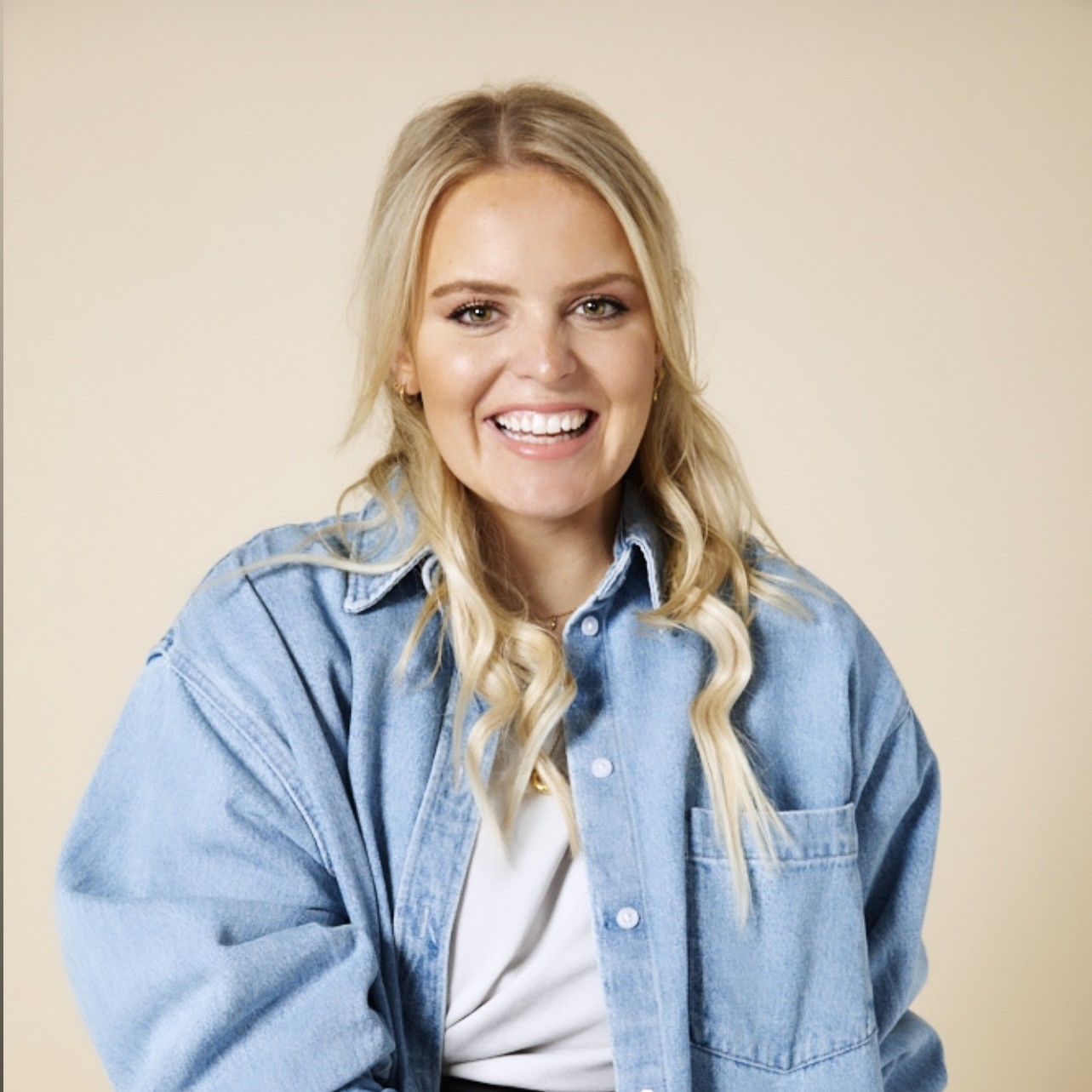
Written by Alex Light
Body image speaker